




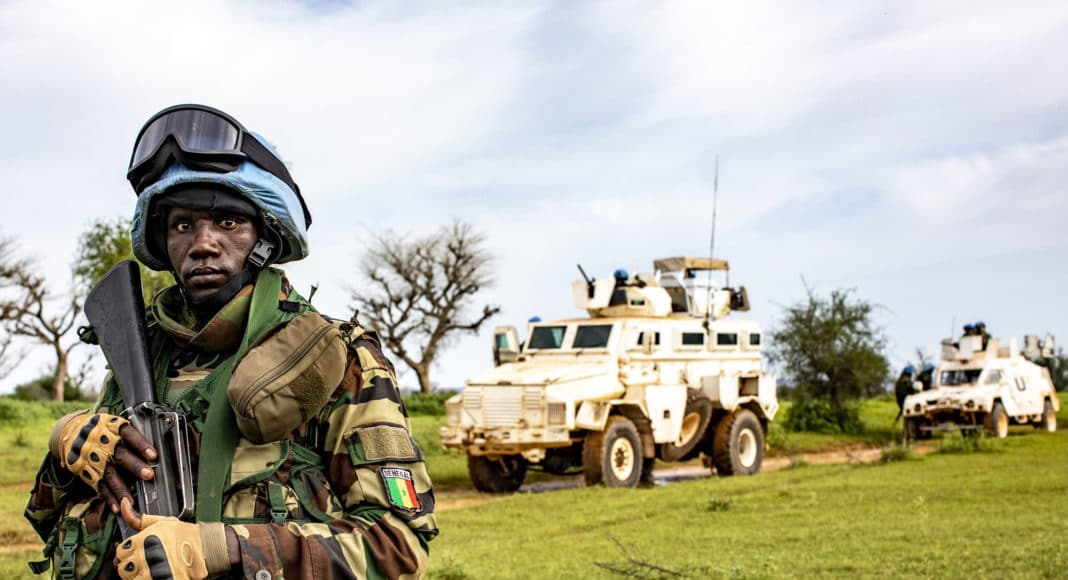

Francophone troop and police-contributing countries (T/PCCs) are confronted with structural obstacles that constrain their capacity to contribute in a comprehensive manner to the peacekeeping system. On the one hand, these obstacles can be categorised as operational and technical in nature. They include difficulties in maintaining compliance with the UN’s escalating technical requirements, both in terms of equipment and highly specialised personnel. Additionally, there is a shortage of financial and human resources allocated for troop training, compounded by the scarcity of training content available in French. On the other hand, some of the obstacles are administrative and political in nature, including difficulties in understanding the UN’s administrative procedures, which are often available only in English, shortcomings in monitoring changes in UN norms and standards, and a lack of influence on political decisions relating to peacekeeping. In addition to the structural obstacles that have been previously outlined, the contemporary political and security environment is a source of uncertainty. The United Nations (UN) has expressed a desire to reform its peacekeeping mechanism in order to enhance its resilience and adaptability in the face of volatile deployment areas. However, the organisation is also confronted with an unprecedented financial and budgetary crisis, which is compelling it to reduce the military and police personnel of its missions. This situation poses significant challenges for troop and police-contributing countries (T/PCCs) in terms of their ability to effectively project their capabilities within the UN system. In order to mitigate the aforementioned challenges, it is crucial for these states to ensure that their voices are heard in the political and administrative processes that guide and define UN peacekeeping practices.
This note investigates the potential for Francophone actors to pool and network their resources in order to share capacity-building efforts and associated costs, but also to increase the reach of their voices in relevant decision-making spaces. This document is organized into two distinct sections: the operational axis and the political axis. It encompasses ten domains of reflection, which have given rise to the formulation of more than twenty concrete recommendations, primarily intended for T/PCCs.

This content was originally published in French in December 2025. Please see Renforcer la contribution francophone aux opérations de paix – Pistes de réflexion pour une approche coopérative et mutualisée
Solène Jomier est chargée de recherche au GRIP et coordinatrice de l'Observatoire Boutros-Ghali. Elle est diplômée de l’Institut d’Études Politiques (IEP) de Rennes et est titulaire d’un master of Arts (MA) en Relations Internationales de l’Université de Warwick (Royaume-Uni). Ses domaines d’expertise incluent le maintien de la paix (Peacekeeping) onusien, les enjeux de performance et d'inclusivité dans les missions de paix, et les conflits sur le continent africain.